Harper County Dog Registration Information
Service Dogs and Emotional Support Animals in Harper, Oklahoma
If you’re asking where do I register my dog in Harper County, Oklahoma for my service dog or emotional support dog, the most important thing to know is this: in Oklahoma, a dog’s license/registration (when required) is typically handled by a local city or county office, while a dog’s service dog legal status comes from training and federal law—not from a paid “registration” website.
This page explains how a dog license in Harper County, Oklahoma commonly works, what rabies rules usually apply, which local offices are reasonable starting points, and the key differences between dog licensing, a service dog, and an emotional support animal (ESA).
Where to Register or License Your Dog in Harper County, Oklahoma
Because licensing and rabies enforcement can be handled at the city level (for dogs living inside town limits) or supported by county offices (especially for animal control or enforcement questions), below are several official local-government offices that are common starting points for where to register a dog in Harper County, Oklahoma.
Harper County District Court (Courthouse)
- Address: 311 SE First Street
- City/State/ZIP: Buffalo, OK 73834
- Phone: (580) 735-2010
- Office hours: 8:00am to 4:00pm
Harper County Sheriff’s Office
- Phone: (580) 735-2213
- Mailing/Location note: Listed as located at the county courthouse in Buffalo, OK 73834 (mailing details may vary by directory).
Town of Laverne (City/Town Offices)
- Address: 7th & Oklahoma, Suite #6
- City/State/ZIP: Laverne, OK 73848
- Phone: (580) 921-3312
Town of Buffalo, Oklahoma (Town/City Offices)
- Phone: (580) 735-2551
Overview of Dog Licensing in Harper County, Oklahoma
What “dog registration” usually means
When people say “register my dog,” they can mean different things: a city-issued dog license (often a tag), a rabies certificate from a veterinarian, or a paid “service dog registration” online. Only the first two are commonly connected to local government and public health rules.
Most licensing is handled locally
In Oklahoma, dog control rules are commonly enforced through local ordinances (town/city) and local enforcement (city police/animal control, sheriff in rural areas). That’s why “where to register a dog in Harper County, Oklahoma” depends on whether you live inside Buffalo, Laverne, another municipality, or in an unincorporated part of the county.
Rabies vaccination is a statewide requirement
Oklahoma rules require dogs, cats, and ferrets over four months of age to be currently immunized against rabies. Your veterinarian’s rabies certificate and tag are commonly used as proof when a local license is issued or when an animal control or law enforcement agency requests documentation.
How Dog Licensing Works Locally in Harper County, Oklahoma
Step 1: Determine which jurisdiction you live in
The fastest way to avoid getting bounced between offices is to determine whether your address is:
- Inside city/town limits (for example, Buffalo or Laverne): the city/town office (or the department it designates) typically provides rules on licensing, tags, and nuisance/at-large enforcement.
- Unincorporated Harper County (outside town limits): county-level enforcement often routes through the sheriff’s office or a county-designated contact, especially for complaints and enforcement.
Step 2: Ask the right question when you call
When contacting an office, use clear wording so staff understand you’re asking about a local dog license, not online “registration.” A good script:
Suggested phone script
“Hi, I live at [your city/town or rural route] in Harper County. I’m trying to find out where to register a dog in Harper County, Oklahoma and whether my location requires a dog license in Harper County, Oklahoma. Which office issues dog tags/licenses or enforces rabies rules for my address?”
If your dog is a service dog or an ESA, you can add: “My dog is a service dog / emotional support animal, but I understand local rabies and licensing rules may still apply.”
Step 3: Keep rabies documentation ready
Even if your specific area does not issue a license tag, rabies vaccination proof is often the key document requested during:
- licensing or tag issuance (where applicable)
- dog bite investigations
- stray/at-large impound situations
- boarding, grooming, training, or certain housing requirements
Service Dog Laws in Harper County, Oklahoma
A service dog is not “licensed” into existence
A service dog’s legal status generally comes from federal disability law (commonly discussed under ADA guidance) and the dog’s training to perform specific work or tasks related to a person’s disability. That means you typically do not “register” a service dog with a paid registry to make it legal.
What businesses and public places may ask
In many public-access situations, if it’s not obvious what the dog does, staff are generally limited to asking two questions: whether the dog is required because of a disability and what work or task the dog has been trained to perform. They should not demand medical records or require an ID card as a condition of entry.
Local health and safety rules still apply
Even with service-dog protections, you should still comply with applicable local requirements such as rabies vaccination rules and any generally applicable dog-at-large or nuisance ordinances. In other words: service dog protections relate to access and accommodation, while licensing/rabies rules relate to public health and animal control.
Emotional Support Animal Rules in Harper County, Oklahoma
ESAs are different from service dogs
Emotional support animals can provide important mental health benefits, but an ESA is not the same thing as a service dog. Generally, ESAs are not granted the same public-access rights as service dogs because they are not required to be trained to perform specific tasks related to a disability.
Where ESAs most often matter: housing
ESAs most commonly come up in housing contexts, where documentation from a qualified health professional may be relevant to request a reasonable accommodation. That said, a housing accommodation is still separate from a local dog license in Harper County, Oklahoma. You may need both: (1) housing documentation (if applicable) and (2) local licensing/rabies compliance.
Avoid confusion with “ESA registration” products
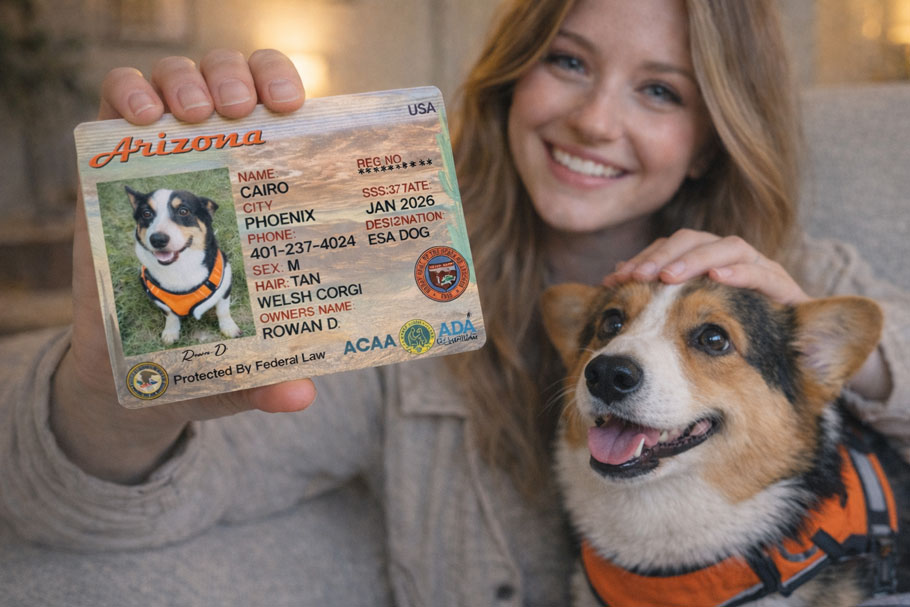
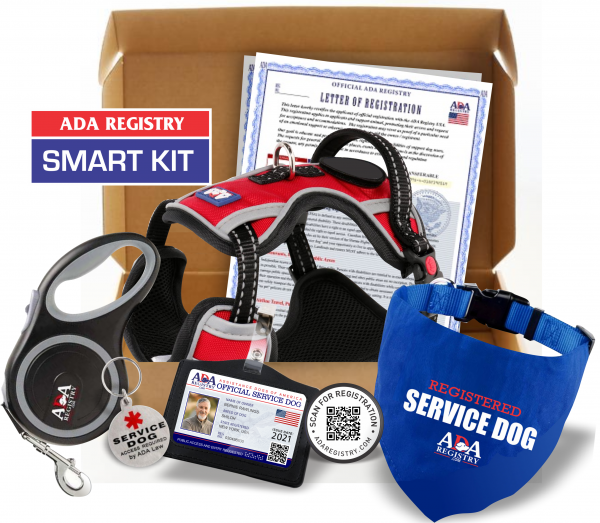
Many websites sell instant ESA “registrations.” A paid certificate is not the same as complying with local animal rules. For local compliance questions (rabies, leash, nuisance, licensing/tag rules), start with local government offices listed above.
Frequently Asked Questions
Register A Dog In Other Oklahoma Counties
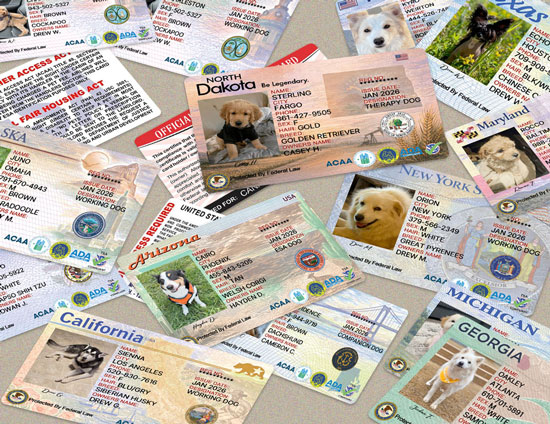
Select your county below to get started with your dog’s ID card. Requirements and license designs may vary by county, so choose your location to see the correct options and complete your pup’s registration.
- Adair County Dog Registration
- Alfalfa County Dog Registration
- Atoka County Dog Registration
- Beaver County Dog Registration
- Beckham County Dog Registration
- Blaine County Dog Registration
- Bryan County Dog Registration
- Caddo County Dog Registration
- Canadian County Dog Registration
- Carter County Dog Registration
- Cherokee County Dog Registration
- Choctaw County Dog Registration
- Cimarron County Dog Registration
- Cleveland County Dog Registration
- Coal County Dog Registration
- Comanche County Dog Registration
- Cotton County Dog Registration
- Craig County Dog Registration
- Creek County Dog Registration
- Custer County Dog Registration
- Delaware County Dog Registration
- Dewey County Dog Registration
- Ellis County Dog Registration
- Garfield County Dog Registration
- Garvin County Dog Registration
- Grady County Dog Registration
- Grant County Dog Registration
- Greer County Dog Registration
- Harmon County Dog Registration
- Haskell County Dog Registration
- Hughes County Dog Registration
- Jackson County Dog Registration
- Jefferson County Dog Registration
- Johnston County Dog Registration
- Kay County Dog Registration
- Kingfisher County Dog Registration
- Kiowa County Dog Registration
- Latimer County Dog Registration
- LeFlore County Dog Registration
- Lincoln County Dog Registration
- Logan County Dog Registration
- Love County Dog Registration
- Major County Dog Registration
- Marshall County Dog Registration
- Mayes County Dog Registration
- McClain County Dog Registration
- McCurtain County Dog Registration
- McIntosh County Dog Registration
- Murray County Dog Registration
- Muskogee County Dog Registration
- Noble County Dog Registration
- Nowata County Dog Registration
- Okfuskee County Dog Registration
- Oklahoma County Dog Registration
- Okmulgee County Dog Registration
- Osage County Dog Registration
- Ottawa County Dog Registration
- Pawnee County Dog Registration
- Payne County Dog Registration
- Pittsburg County Dog Registration
- Pontotoc County Dog Registration
- Pottawatomie County Dog Registration
- Pushmataha County Dog Registration
- Roger Mills County Dog Registration
- Rogers County Dog Registration
- Seminole County Dog Registration
- Sequoyah County Dog Registration
- Stephens County Dog Registration
- Texas County Dog Registration
- Tillman County Dog Registration
- Wagoner County Dog Registration
- Washington County Dog Registration
- Washita County Dog Registration
- Woods County Dog Registration
- Woodward County Dog Registration